
Bridal Gharara
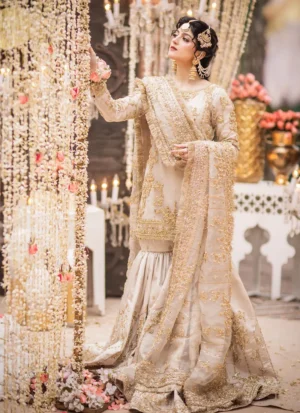
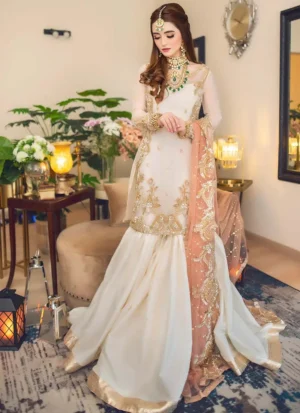
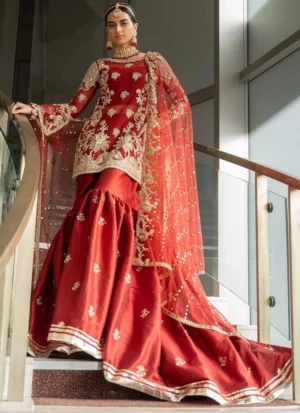
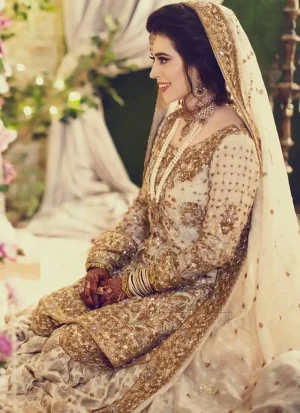
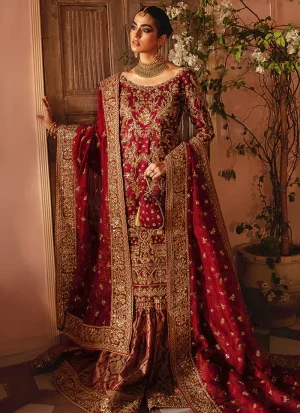
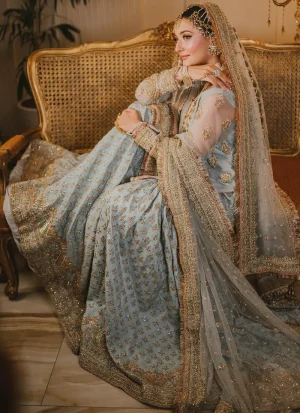
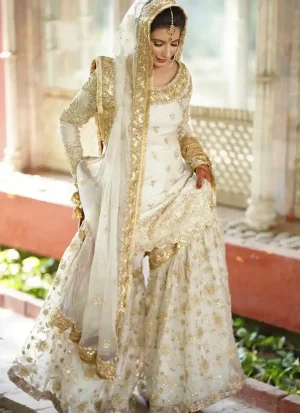
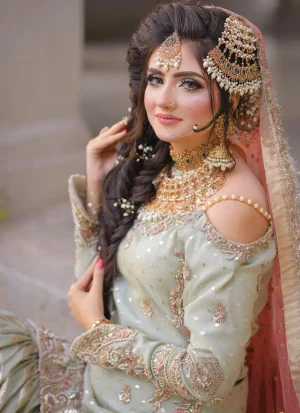
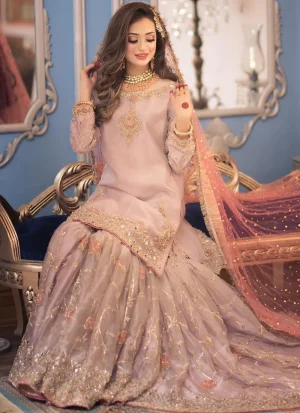
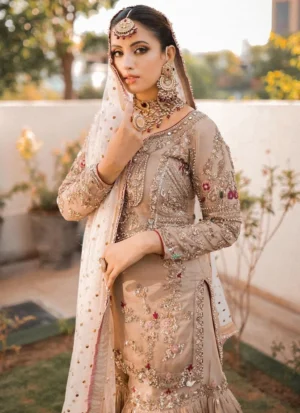
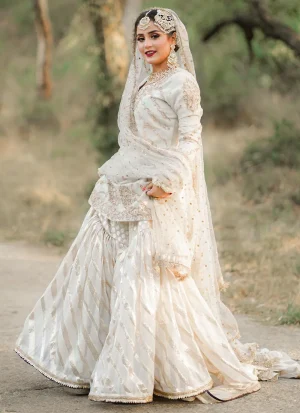
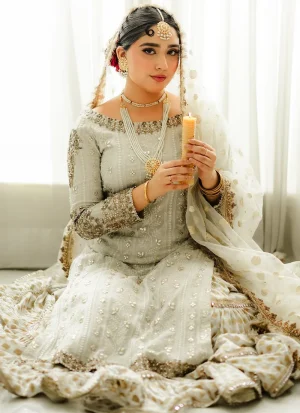
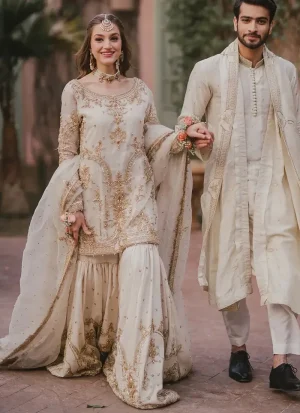
The bridal gharara is one of the oldest silhouettes in Pakistani wedding dress, and for many families it’s still the one that looks most like a bride. The trousers hug the leg to the knee, then open into a mass of pleats, with the join marked by a heavy band of gota or embroidery. Above them sit a short or long kameez and a dupatta worked as richly as the rest. It’s worn at the Baraat in deep red, often in ivory or pastels when the Nikkah is held on a separate day, and increasingly at the Walima. Every bridal gharara is made after you order, and you can ask for progress photos while yours is being made. Decide how much length you want first: that’s what separates a classic gharara from a farshi.
20 résultats affichésTrié du plus récent au plus ancien
-
€899.00
-
 €933.47
 -
-
-
 €899.00
 -
 €999.00
 -
€799.00
-
€799.00
-
€799.00
-
€799.00
-
€499.00
-
€699.00
-
€899.00
-
€400.00
-
€549.00
-
€899.00
-
€666.00
-
€549.00




20 résultats affichésTrié du plus récent au plus ancien
What makes a gharara bridal
A guest gharara and a bridal one share a cut but little else. The bridal version uses heavier fabrics such as raw silk, jamawar, velvet or tissue, usually carries embroidery well beyond the knee band, and is often cut longer. The kameez is heavily worked too, and the dupatta is frequently doubled: one draped over the head, one across the shoulders or arms. Guests who want the silhouette in a lighter form will find it among our guest ghararas.
Classic or farshi?
A classic bridal gharara stops at the ankle or just touches the floor. A farshi gharara is cut longer and fuller so that it spreads across the floor behind you; the name comes from farsh, the Urdu word for floor. The farshi looks spectacular in photographs and on a stage, but it asks more of you. You’ll need to lift it on stairs and have someone arrange it when you sit. If your day involves a lot of walking, the classic length is the practical choice.
Colour by ceremony
At the Baraat, red and maroon with gold are still the benchmark, and our Baraat dresses show the day’s other options. For the Nikkah, ivory, pale gold, mint and peach ghararas have become very popular, often with silver or pearl work. At the Walima, softer jewel tones and pastels with champagne embroidery keep the look bridal without repeating the Baraat. The complete set of outfits for each day is in our bridal collection.
Gharara, lehenga or sharara?
A lehenga is a skirt, so it’s the most familiar shape to dance and sit in, and our bridal lehengas are organised by colour if you already know your shade. A sharara flares from the hip rather than the knee, giving a softer, more continuous volume, and it’s a favourite for the Nikkah; our Nikkah shararas are gathered on their own page. The gharara is the most structured of the three, and for many Pakistani families still the most bridal.